
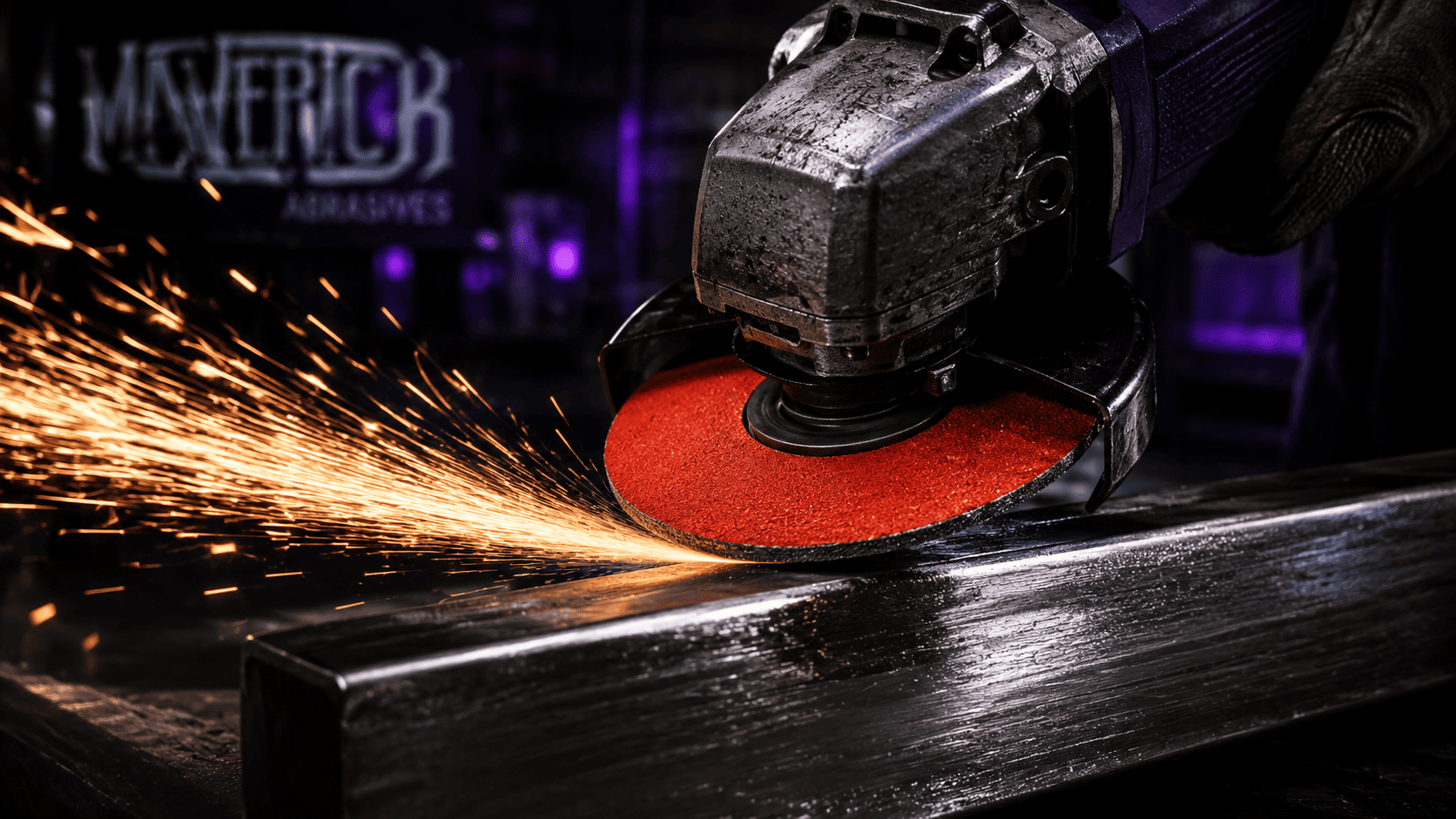
You’ve probably been through this before: the disc starts out aggressive, cuts well in the first few minutes… and then basically turns into an “expensive polisher.” The operator increases the pressure, the workpiece heats up, the finish deteriorates, and the disc needs to be replaced too soon.
It is precisely in this kind of scenario that the microcrystalline ceramic abrasives They're starting to make sense.
And no—they aren't “just more expensive sandpaper.”.
Depending on the process, they can reduce changeovers, minimize heating, increase material removal, and even lower the cost per part. Here’s the important detail: the benefit isn’t reflected in the unit price. It’s reflected in the running process.
If you work with stainless steel, heavy-duty carbon steel, welding, boilermaking, industrial sheet metal fabrication, or continuous roughing operations, it’s worth understanding where this technology truly delivers results.
Table of Contents
- What Are Microcrystalline Ceramic Abrasives?
- How Self-Sharpening Works
- Why is the cut “cooler”?”
- Practical difference in performance
- Where they really make a difference
- When TCO Justifies the Investment
- Processes That Benefit the Most
- When an Upgrade Might NOT Be Worth It
- How to Choose the Right Abrasive
- Conclusion
What Are Microcrystalline Ceramic Abrasives?
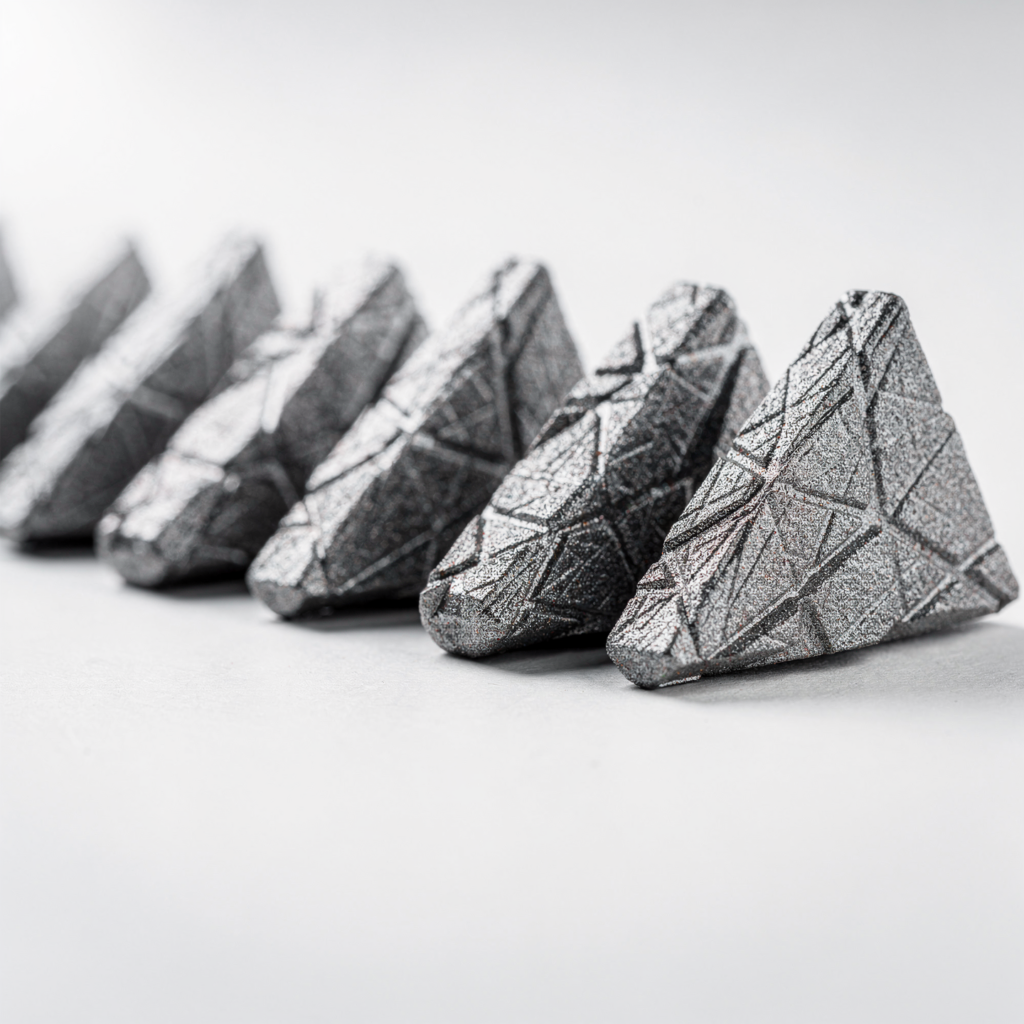
Microcrystalline ceramic abrasives use grains with extremely small and uniform structures, designed to fracture in a controlled manner during use.
Translated for better understanding:
While a conventional abrasive “rounds off” and loses its cutting edge over time, the ceramic continuously breaks into sharp micro-edges.
It's the famous effect of self-sharpening.
Think of it this way:
A common abrasive works like a knife that gradually becomes dull.
Microcrystalline ceramic acts like a knife that sharpens the blade on its own as it cuts.
Result?
- A more aggressive cut for a longer period
- Less operator pressure
- Less heating
- Fewer disk swaps
- More consistent finish
How Self-Sharpening Works
The real difference lies in the controlled breakage of the abrasive grain.
In traditional abrasives:
- The grain wears down;
- It loses its edge;
- It starts to “slip”;
- It generates excessive heat.
For microcrystalline materials:
- Microfractures expose new edges;
- Cutting power remains high;
- The removal rate remains constant.
This keeps the operation more stable throughout the abrasive's service life.
In continuous industrial applications, this consistency makes a huge difference.
Especially when the problem isn't just “removing material,” but maintaining productivity without creating rework.
Why Is the Cut “Colder”?
This is one of the most important—and most underrated—points.
The less efficient the cut, the more friction you create.
More friction = higher temperature.
The microcrystalline ceramic abrasive cuts more efficiently because it continuously maintains sharp edges. This reduces the effort required to remove material.
In practice:
- Less heat generation;
- Less surface burning;
- Lower risk of thermal changes;
- Less blue discoloration in stainless steel;
- Less clogging.
With heat-sensitive materials, this completely changes the final result.
Practical Difference in Yield
Practical Difference in Yield
This is where the upgrade starts to make financial sense.
The most common mistake is to compare:
“How much does the album cost?”
The correct question is:
“How much does it cost to process each item?”
That's the TCO reasoning (Total Cost of Ownership).
A Practical Comparison: Conventional vs. Ceramic
| Criterion | Conventional Abrasive | Microcrystalline Ceramic |
|---|---|---|
| Service life: | Average | Discharge |
| Removal rate: | It falls quickly | Maintains stability |
| Temperature: | Higher | Lower |
| Exchanges: | Frequently Asked Questions | Reduced |
| Operator pressure: | Largest | Minor |
| Finishing: | Variable | Consistent |
| Unit cost: | Minor | Largest |
| Cost per unit: | It could be bigger | It could be smaller |
When TCO Justifies an Upgrade
The microcrystalline ceramic abrasives They are usually worth it when the following conditions are met:
High production volume
The more parts per shift, the greater the impact of disk changes and downtime.
Heavy-duty operations
Aggressive roughing, weld removal, and heavy-duty preparation are ideal scenarios.
Difficult materials
In particular:
- stainless steel;
- hard alloys;
- hardened steel;
- titanium;
- metal superalloys;
High downtime costs
On production lines, the time lost changing abrasives costs more than most people realize.
Fewer exchanges means:
- except for setup;
- fewer interruptions;
- more stability.
Processes That Benefit the Most
Heavy-duty weld grinding
Especially in:
- boiler making;
- metal structures;
- road equipment;
- heavy metallurgy.
Stainless Steel and Special Steel
Cold cutting reduces thermal changes and improves the final finish.
Industrial Automation
Automated processes require repeatability.
Inconsistent abrasives cause:
- dimensional variation;
- uneven finish;
- need for recalibration.
Auto Body Repair and Paint Preparation
Better temperature control helps prepare the surface for painting.
Continuous production
The longer the production cycle, the greater the cumulative profit.
When an Upgrade Might NOT Be Worth It
Not every process requires a ceramic abrasive.
And that's okay.
For light or occasional use, a good-quality conventional abrasive can offer excellent value for the money.
Generally, upgrading is NOT worth it when:
- use is sporadic;
- the material is soft;
- The operation is simple;
- Productivity is not a bottleneck;
- The initial cost outweighs the return.
In this scenario, it may take too long to see a return on the investment.
How to Choose the Right Abrasive
Before changing the entire operation, consider the following:
Material Covered
Stainless steel, carbon steel, aluminum, and composites respond differently.
Type of operation
- Cut
- Thinning
- Finishing
- Pre-painting
Each stage requires a different type of abrasive.
Applied pressure
Ceramics generally perform better under controlled and constant pressure.
Machine used
RPM, power, and stability directly influence performance.
Actual objective
Do you want to:
- greater removal?
- Fewer exchanges?
- finish?
- lowest temperature?
- productivity?
The answer changes the ideal specification.
Safety: Don't Ignore This
High-performance abrasives are designed for high-speed operation and aggressive applications.
Always wear appropriate PPE:
- safety glasses;
- particle-filtering mask;
- ear protection;
- appropriate gloves;
- an apron when necessary.
Please also note:
- Maximum disk RPM;
- machine specifications;
- Proper storage of the abrasive.
So… Is it worth upgrading?
In most heavy industrial operations: yes.
But the real benefit doesn't come from the abrasive alone.
You are here:
- fewer stops;
- fewer exchanges;
- greater stability;
- less heat;
- increased productivity;
- lower cost per unit.
When the process demands consistent performance under pressure, microcrystalline ceramic abrasives cease to be a “premium product” and become a tool for productivity.
And an efficient production process always costs less in the long run.
Conclusion
The microcrystalline ceramic abrasives They deliver exactly what the industry is looking for today: higher output, fewer interruptions, and consistent finish.
The initial price may seem daunting at first. But for critical operations, the TCO usually tells a different story.
If your process suffers from:
- excessive trading;
- warm-up;
- rapid wear;
- inconsistency in the finish;
Maybe the problem isn't the operation.
Maybe it's the wrong abrasive for her.
Want to find out if ceramic abrasives really reduce your cost per part? Talk to the technical team at Maverick Abrasivos and compare them in your process.
 Portuguese
  English
  Spanish