
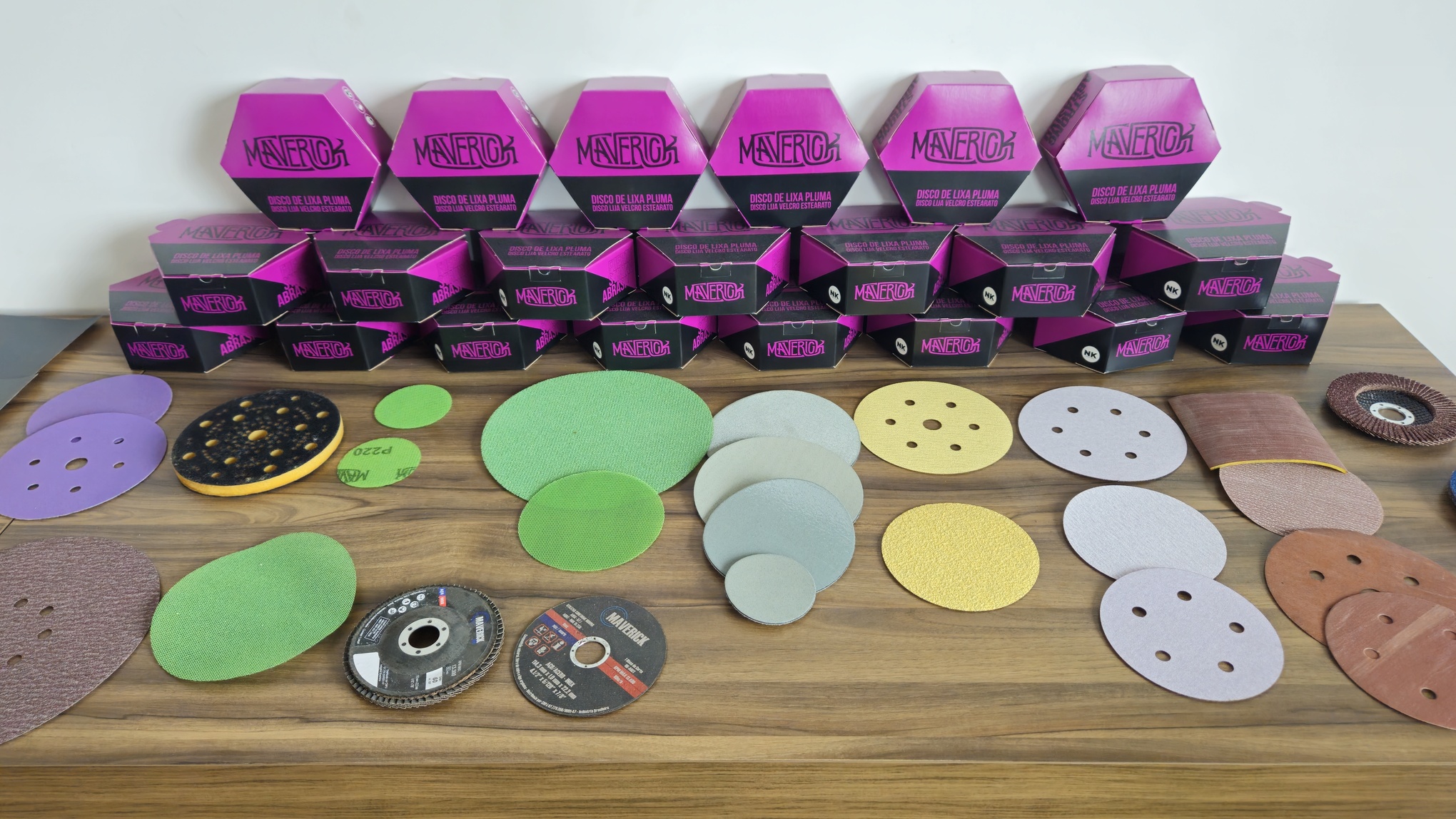
What are abrasives, and why is it important to choose the right one?
If you work with bodywork, metalworking shop, metallurgical, carpentry shop or industrial maintenance, you already know how much choosing the right abrasive can affect your results. The wrong abrasive, used improperly, not only waste material, but also increases the cost, reduces efficiency e compromises quality of the service. In this guide, we’ll explain the main types of abrasives, their applications, and the most common mistakes that occur on a daily basis.
What are abrasives?
Understand the basis for making the right choice
Abrasives are materials used to cutting, roughing, sanding, and polishing other surfaces through friction. They can be found in records, sandpaper, grinding wheels, abrasive brushes and many other formats.
Each abrasive has:
- Grain (the “cutting edge”—such as aluminum oxide, ceramic, or zirconia)
- Support (material that holds the grain—such as paper, cloth, or plastic)
- Binder (a substance that secures the grain to the backing)
Main Types of Abrasives and Where to Use Them
The Right Choice for Every Task
1. Cutting Discs
Used primarily for to cut into sections metals, pipes, and sheet metal. Available in various sizes and thicknesses, the choice of the ideal cutting disc depends on the material you are cutting.
Where to use it: metal, stainless steel, aluminum, carbon steel.
2. Roughing Discs
Perfect for remove material aggressively. They are thicker than cutting discs and are used at an angle to rough-cut the surface of metals and welds.
Where to use it: sheet metal work, weld repair, part leveling.
3. Flap Disc
Ideal for roughing and finishing. It features layers of sandpaper that provide a smoother finish while still removing material.
Where to use it: Weld finishing, surface leveling, and repairs.
4. Sandpaper (Sheets, Rolls, Discs, or Strips)
Used for finer finishes on different surfaces. They can be manual or machine-mounted.
Where to use it: wood, putty, metal, automotive paint.
5. Abrasive Grinding Wheels
They're perfect for heavy thinning e sharpening. Typically used in heavier machinery such as grinders and grinding machines.
Where to use it: rough cutting over large areas, tool sharpening.
6. Abrasive and Nonwoven Brushes
Used for cleaning e light rust removal without damaging the part.
Where to use it: weld cleaning, smooth finishing, surface texturing.
Choosing the Right Abrasive Grit
Abrasive Grains and Their Applications
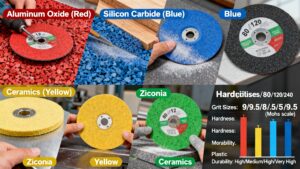
- Aluminum Oxide: Versatile, used for cutting and roughing on steel, iron, and other metal surfaces.
- Zirconia: Ideal for heavy thinning and is widely used in high-demand applications.
- Ceramic: To cooler cut and high performance, ideal for stainless steel and difficult-to-clean materials.
- Silicon Carbide: Used for materials such as concrete e stone, very aggressive.
Abrasive Applications by Industry
When and where to use each abrasive
Auto Body Repair
- Dry sandpaper for pasta and wet sandpaper for painting and fine finishing.
- Flap discs for weld finishing.
Metalworking and Metal Fabrication
- Cutting discs for metals.
- Roughing discs for welding and preparing parts.
Carpentry Shop
- Sandpaper rolls and discs for solid wood and MDF.
- Finer grains for finishing and between coats of varnish.
Stainless Steel
- Special abrasives for stainless steel to prevent contamination and premature oxidation.
Common Mistakes When Using Abrasives (and How to Avoid Them)
Mistakes That Hinder Your Productivity
1. Using the wrong abrasive for the material
Choosing the wrong abrasive can damage the part e shorten the service life of the abrasive.
Example: Use carbon steel cutting discs on stainless steel.
2. Excessive pressure on the machine
A excessive pressure causes the grain to wear down quickly and the part to overheat, which can even to deform the material.
Avoid: Don't tighten the machine too much; use the recommended pressure.
3. Choosing the wrong grain for the work phase
Each phase of the work requires a type of grain. Do not switch grains at random.
Example: Do not use 120-grit sandpaper for heavy-duty sanding.
How Can You Prevent the Waste of Abrasives?
Tips for Extending Durability and Efficiency
- Always choose the right abrasive depending on the material and type of work.
- Do not use discs and sandpaper at inappropriate rotational speeds.
- Store abrasives properly, away from moisture and high temperatures.
- Train the team to use the abrasives as efficiently as possible.
Conclusion: Abrasives aren't an expense—they're an investment!
With the right choice and proper use of abrasives, you streamlines your work, increases durability e reduces costs. Take advantage of these tips to start using abrasives more intelligently and efficiently in your workshop.
If you need personalized technical advice, please feel free to contact the team at Maverick. We are here to use our expertise to help you choose the ideal abrasives for each application.

Do you have questions about which abrasive to choose for your next project?
Contact us right away, and our technical team will help you choose the best solution for your needs. Don’t waste time or money—make the right choice from the start!
 Portuguese
  English
  Spanish